Bodalla And the Morts

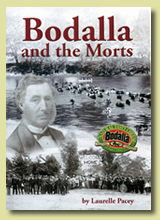
Bodalla and the Morts

Bodalla and the Morts explains why the small village of Bodalla has two beautiful churches designed by celebrated nineteenth century architects, and a hotel once considered by the well-to-do the only place worth staying south of Kiama.
It details Bodalla’s pioneering role in the Australian cheese industry, initially due to the determination of Thomas Sutcliffe Mort.
Mort was a leading figure in trade and commerce in mid nineteenth century NSW. He believed passionately the growing Colony should develop its own agriculture and manufacturing industries. His enterprises included the auction of wool and pastoral properties, building ships and locomotives, gold mining and shipping, and a pioneering role in the frozen meat export trade.
Mort established the Bodalla Estate in 1860 as his country residence, but went on to show how cheesemaking in Australia could move from being a cottage to a factory industry.
The book’s main focus is on the Mort family’s long association with Bodalla, the Estate’s various stages under different managers, through to the sale of the Bodalla Company and the Estate to Panfida in its bid to control the Sydney milk market, and the subsequent break-up of the Estate.
Bodalla and the Morts draws extensively on primary sources – Bodalla Company records, contemporary newspaper articles, and Mort family letters and journals – and is enriched with many early photographs from the Mort family archives.

144 pages, over 160 images. Cost $40, plus $9 p&p.

visit our online shop

Close Window>
Bodalla And the Morts

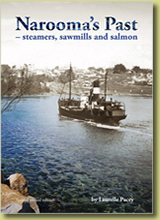
Narooma's Past

Narooma was once quite a busy port with up to three ships in port at the one time. Ships took timber from its sawmills to Sydney and returned with supplies for the town.
Yet little remains today to remind us of the many ships and seamen who braved the bar at the Inlet’s entrance, of the ships built in the Inlet, or of the frustrations when ships were bar-bound, and attempts to improve Narooma as a port.
Many goldminers passed through the area, some staying a short while, while bullockies, millhands and sawmillers worked the forests around Wagonga Inlet for almost 100 years.
Narooma had Australia’s first fish cannery, following the visit of American author and game fisherman Zane Grey, where salmon and tuna were canned for many years. It also had private hotels and guesthouses with a style and glamour most other south coast towns lacked.
Narooma has been a tourist destination for almost 100 years, but in the 1920s and 30s it was the holiday destination for the adventurous or well-to-do people from grazing properties out west and professional people from Sydney. They enjoyed regattas at Ringlands Point, picnics up the river or out to Montague Island, and big game fishing off the coast.

88 pages, 102 images including maps. Cost $30, plus $3 p&p

visit our online shop

Close Window>

Bodalla And the Morts

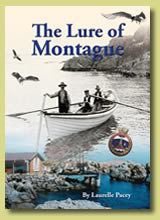
The Lure of Montague

The Lure of Montague includes stories about the construction of the lighthouse and the keepers’ residences, about living on Montague and the difficulties families had in receiving supplies, the secret Navy station, and the impact of a remarkable woman Judith Cassell in her determination to conserve the island’s seabirds, Little Penguins and seals.
It also tells of many characters associated with Montague over the years, including Ian Cameron whose association with Montague went back over 80 years to when his father was a lightkeeper culminating in Ian being in charge of lighthouse maintenance in NSW.
There are also stories about the island’s cunning horse that preferred swimming to the mainland to working, and the formation of the first gamefishing club in Australia at a camp on Montague.
More recent history includes the community’s fight in the 1980s to keep lightkeepers on Montague, to keep the Light mechanism in Narooma, and the Commonwealth handing the island’s management over to the National Parks and Wildlife Service of NSW, and its subsequent challenges.

72 pages, 64 images (including maps). Cost $25, plus $3 p&p.

visit our online shop

Close Window>

Bodalla And the Morts

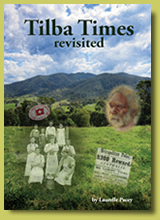
Tilba Times

Tilba Times tells of the local Aboriginal people and their close ties with the Bate family, the development of cheese factories in the district, and of mining on the mountain when Gulaga was once home to about 300 people.
Tilba Tilba was once the major village in the district, predating Narooma and Central Tilba. It had a reticulated water supply and generated its own electricity long before other places on the south coast.
Central Tilba grew up around the ABC Cheese factory, the first cheese co-operative in NSW.
When the Co-op merged with the Bega Co-op in 1972, Central Tilba had to reinvent itself to survive. This led to its National Trust heritage listing and a new phase for the area led by a pride in its past.
It includes a small history of each of the main properties in the area.

64 pages, 63 images (including maps). Cost $22, plus $3 p&p.

visit our online shop

Close Window>

Far South Coast NSW Local Histories


History Books covering Bodalla, Narooma, Montague Island and Tilba Tilba and Central Tilba on the Far South Coast of NSW.

Histories are sold individually or
as a set of four.

Buy direct from the author's online bookshop or...
books are also available from:

Bodalla and the Morts only:
Canberra:
National Library bookshop
Bodalla:
The Dairy Shed
Bodalla Bakery
Gallery Bodalla
Bodalla Motor Cycles and Power Equipment

All history books:
Moruya:
Moruya Books
Narooma:
Narooma Visitor’s Centre
Narooma Newsagency
Central Tilba:
ABC Cheese Factory
Gulaga Gallery
Bega:
Candelo Bookshop

The Author: Laurelle Pacey is an agricultural scientist, journalist and historian who lives on NSW’s far south coast.
Share

Bodalla and the Morts - local history book

Bodalla and the Morts is the fascinating history of how Sydney entrepreneur Thomas Sutcliffe set up the Bodalla Estate in the 1860s and how he made it a showplace of the Colony’s industrial enterprise by producing cheese to rival English imports.
It tells of the Estate’s changing fortunes, its people over 130 years, the Mort family’s long association, and the Estate’s sale and breakup in 1989.

144 pages, over 160 images. Cost $40, plus $9 p&p.

Read more>

visit our online shop


Narooma - local history book

Narooma’s Past – steamers, sawmills and salmon evokes Narooma’s rich maritime history - the coastal steamers who carried locally sawn timber to Sydney, goldmining, the many sawmills around Wagonga Inlet, the stylish 1930s when Narooma was ‘the’ summer tourist destination for the well-to-do, Australia’s first commercial fish cannery and the many people whose lives have played out ‘on the river’.

88 pages, 102 images including maps. Cost $30, plus $3 p&p.

Read more>

visit our online shop

Montague Island NSW local history book

The Lure of Montague - This history tells of Montague Island’s significance to Aboriginal people, the history of its lightstation, and the stories of people drawn th ere over the years for work, sport, or to appreciate its wildlife.

It also tells of the birth of big game fishing in Australia, and efforts through the years to protect the island’s wildlife.

72 pages, 64 images (including maps). Cost $25, plus $3 p&p.

Read more>

visit our online shop

Tillba and Central tilba NSW local history book

Tilba Times - This history begins with the Dreaming and tells of the Tilba district’s goldmining and dairying industry, the people involved including the Bate families, and the heritage listed villages of Central Tilba and Tilba Tilba.

The district, south of Narooma, is dominated by Gulaga (Mt Dromedary) which is a special place for the local Yuin people.
Co-author Norm Hoyer.

64 pages, 63 images (including maps). Cost $22, plus $3 p&p.

Read more>

visit our online shop